
Defensive Engineering in Modern Enterprise Systems
Security is not an add-on; it is a foundational architecture requirement. Explore why proactive vulnerability management, secure supply chain practices, and zero-trust engineering are vital to safeguarding modern enterprise platforms.
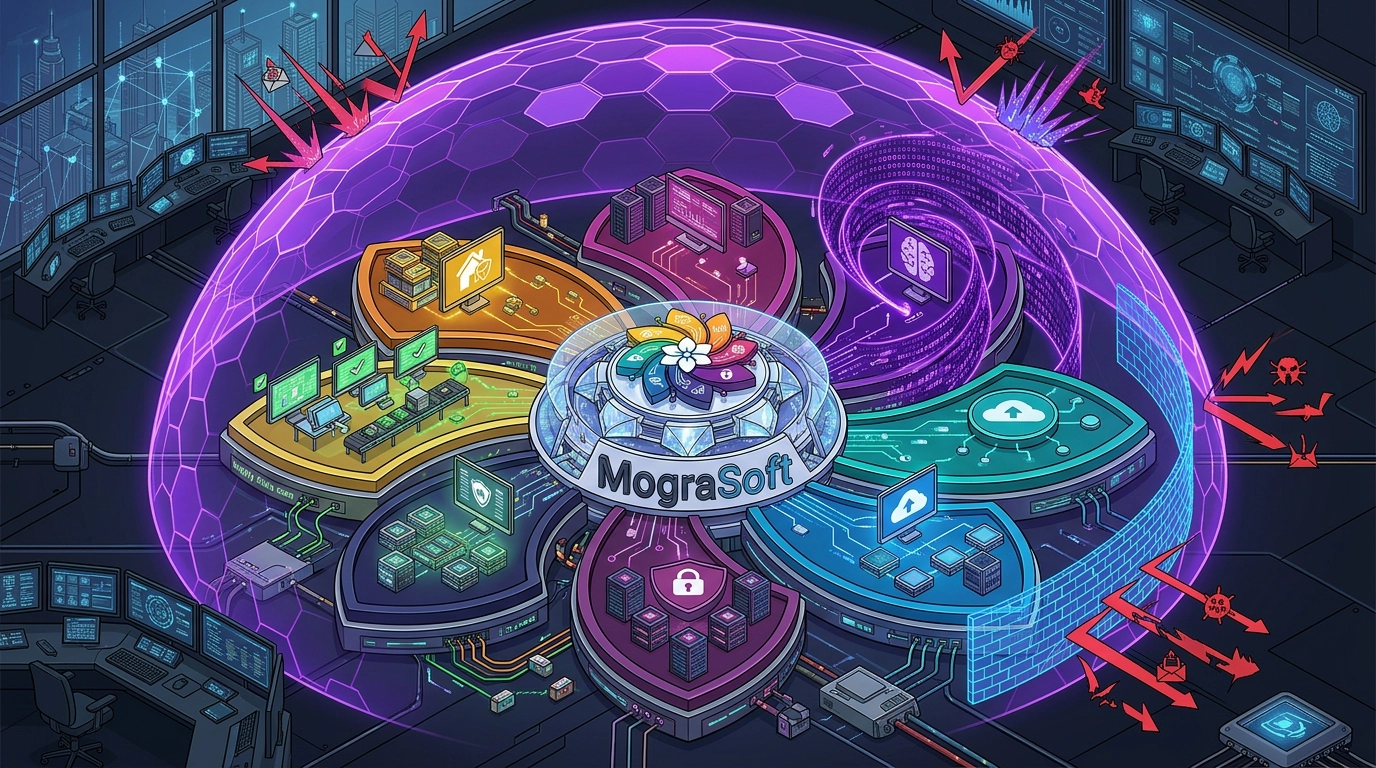 Click to Expand
The Reality of Modern Threat Vectors
As distributed architectures, microservices, and third-party integrations expand the attack surface, perimeter-only defenses are no longer sufficient. Modern systems must be engineered under the assumption that breaches will be attempted continuously. Real resilience demands defensive programming, strict supply chain management, and a zero-trust posture across all operational layers.
1. Why Security is Critical in Modern Enterprise Systems
A single unpatched vulnerability can result in disastrous financial loss, severe regulatory penalties (GDPR, HIPAA, PCI-DSS), and permanent brand erosion. Enterprise platforms handle mission-critical financial transactions, sensitive personal data, and proprietary intellectual property—making them prime targets for automated botnets, ransomware campaigns, and sophisticated state-sponsored threat actors.
Why Software Teams Must Stay Vigilant:
- Automated Scanning at Scale: Threat actors deploy automated bots that scan public IP ranges and code repositories within minutes of a new CVE disclosure looking for unpatched endpoints.
- Sophisticated Lateral Movement: Attackers often target lower-environment endpoints or non-critical microservices to gain an initial foothold before escalating privileges to compromise core production databases.
- Ransomware & Operational Paralysis: Modern attacks focus not just on data theft, but on encrypting operational storage and backups to halt business functions completely.
2. Supply Chain Security & Open-Source Risks
Modern applications rely heavily on open-source libraries (NuGet, npm, Maven, PyPI) to accelerate delivery. While beneficial, third-party dependencies represent one of the most critical attack vectors in enterprise software today.
Transitive Dependencies
Importing a single open-source package often pulls in hundreds of nested sub-dependencies, each introducing its own unvetted code paths and potential vulnerabilities.
Typosquatting & Poisoning
Malicious actors publish packages with names similar to popular libraries or compromise legitimate maintainer accounts to inject backdoor payloads directly into build pipelines.
Dependency Best Practices:
- Software Bill of Materials (SBOM): Generate and maintain an automated SBOM for every release build to track exact dependency versions across environments.
- Automated SCA Tools: Integrate Software Composition Analysis tools (Snyk, Dependabot, OWASP Dependency-Check) directly into build pipelines to block vulnerable dependencies automatically.
- Private Package Repositories: Mirror and vet external open-source packages in private artifact feeds (Azure Artifacts, Nexus, JFrog) before making them available to development teams.
3. Preventing Intrusion: Modern Best Practices
Building an intrusion-resistant platform requires a defense-in-depth approach spanning code development, identity configuration, and runtime infrastructure monitoring.
| Security Pillar | Implementation Strategy | Mitigated Risk |
|---|---|---|
| Zero Trust Architecture | Enforce continuous authentication, mutual TLS (mTLS), and strict principle of least privilege across all internal microservice calls. | Prevents lateral movement in the event of an internal network breach. |
| Input Sanitization & Parameterization | Use ORMs (Entity Framework, Dapper) with parameterized queries, strict DTO validation, and encoding to prevent injection. | Completely eliminates SQL Injection (SQLi), Cross-Site Scripting (XSS), and Command Injection risks. |
| Secrets Management | Store connection strings, API keys, and certificates exclusively in key vaults (Azure Key Vault, HashiCorp Vault) using Managed Identities. | Prevents accidental credential leakage in source code repositories or configuration files. |
| Runtime Web Application Firewall (WAF) | Deploy edge WAF rules to inspect HTTP payloads for OWASP Top 10 exploits, rate-limit malicious IP ranges, and block SQLi/XSS. | Shields public application endpoints against automated exploit traffic. |
// Secure Parameterized Query Pattern preventing SQL Injection
                        public async Task<UserAccount?> GetUserSecureAsync(string userEmail, CancellationToken ct)
                        {
                            const string sql = "SELECT Id, Email, PasswordHash, Role FROM Users WHERE Email = @Email AND IsActive = 1;";

                            using var connection = _dbConnectionFactory.CreateConnection();
                            // Using parameterized parameters via Dapper guarantees safe execution
                            return await connection.QueryFirstOrDefaultAsync<UserAccount>(
                                new CommandDefinition(sql, new { Email = userEmail }, cancellationToken: ct)
                            );
                        }
4. Continuous Monitoring & Incident Readiness
Prevention must be paired with real-time detection and rapid response capabilities to contain emerging incidents before they escalate.
SIEM & Telemetry
Centralize audit logs, auth events, and network traces into SIEM platforms (Microsoft Sentinel, Splunk) for real-time anomaly detection.
Automated Key Rotation
Implement automatic key and secret rotation policies to limit the window of exposure for compromised credentials.
Immutable Backups
Maintain air-gapped, immutable data backups to guarantee rapid disaster recovery without paying ransomware demands.